
Changes in Education
The Education Sector is rapidly changing, or is it? As new technologies and forms of learning arise are we changing our education practices as well or are we falling behind. This is a burning question in the education industry amongst many scholars, teachers, students and informed parents. Below are two images that together form a comparison of what some people think our classrooms should look like. The initial is a very tradition classroom layout and the later is symbolising what we are currently seeing throughout the COVID-19 pandemic. A form of online learning where we meet as a group but not in person rather online.
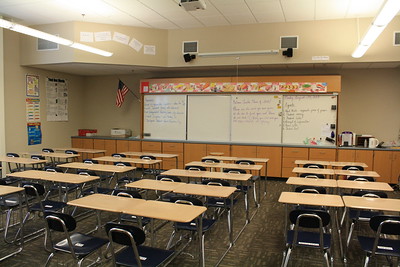
IMG_1128 by xMizLitx (CC BY 2.0)
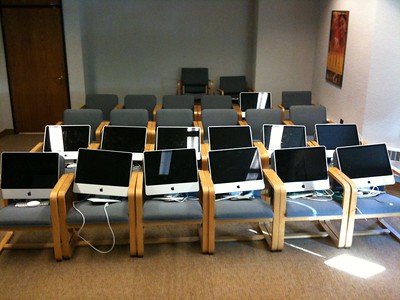
Classroom of the Future by Chris Gebert (CC BY-NC 2.0)
Moving now into my main point for this blog post, why do I think gamification of the education sector is not only necessary but needs to happen sooner rather than later. We are at a point now where education for many younger people is more effort than it is worth. This is generally due to content feeling slow and boring. Where does this feeling come from you may ask. It comes from the instantaneous nature of everything else around us (younger generations). We have become accustom to having access to what we want at the touch of a button through apps or the internet. This is becoming a greater problem in education as we see a decrease in motivation and work ethic. Now this is where I believe gamification can play a largely effective role. Acting as a driving factor in modernising education as well as a source of motivation for students.
Gamification as motivation in education
You may ask how gamification can be used to motivate students rather than distract them. We are seeing gamification being used in many online learning platforms such as Mathletics and TypeQuick. Recently I made a video talking about my own experiences with these two platforms which I will leave here below. For you to gain a further understanding of what these platforms are and how the concept of gamification has been used to make them successful in motivating students.
Through the understanding of how these platforms have effected my own learning. I know that we need to make gamified learning a focus in the years to come. Although currently “only a small percentage of teachers (11.30%) use gamification” (Martí-Parreño, 2016). This change will engage our students more and allow them to feel like the work that they are completing is interesting and useful to them. As they are being constantly rewarded with badges, achievements and high scores through these gamified platforms and apps. Overall this will largely benefit education as a whole because our students will be able to achieve more in shorter periods of time and also achieve greater understandings of concepts and topics they are studying. “The engagement of students in academic activities is related to changes introduced in the context” (da Rocha Seixas, 2016). This quote is powerful for us to understand, it is drawn from research that was conducted and collected throughout the years 2005-2012. It explains to us that a learning environment that is new and in a state of change is the most academically beneficial for students motivation and engagement. This supports my statement that we need to focus on gamified learning as it will bring about change and greatly benefit our students.
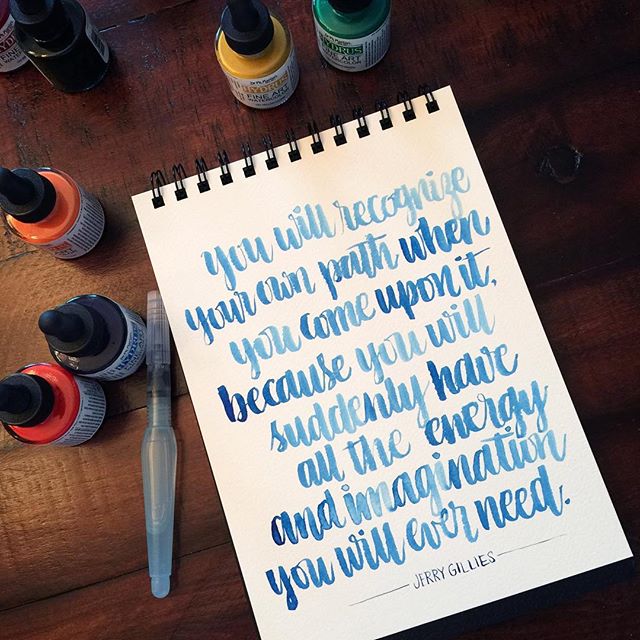
Paint: Dr. Ph. Martin’s Hydrus watercolor, cobalt blue Brush: Pentel Aquash Brush, medium Paper: Canson Watercolor Notebook by Kristina Werner (CC BY-NC-ND 2.0)
Another point I would like to add before concluding this blog is that the introduction of gamified apps, platforms and learning aids. Will allow our educators to meet more students where they are at in terms of learning strengths and styles. As a lot of our younger students are naturally good with technology and gaming. Adapting our education methods to cater to these strengths will allow our students to shine and achieve their full potential.
Conclusion
In conclusion I believe we do need to modernise the education sector. This can and should be done through the use of gamified platforms, apps and programs. This will result in higher engagement and motivation levels across our classrooms and students in general. Also leading to potential higher levels of education as less students will become bored and disengaged with learning material.
Please leave any questions or other ideas in the comments below and stay tuned for my of my blogs to come!!!
References
da Rocha Seixas, Luma, Gomes, Alex Sandro & Filho, Ivanildo José de Melo 2015, ‘Effectiveness of gamification in the engagement of students’, Computers in Human Behavior, vol. 58, May 2016, pp. 48-6da Rocha Seixas, L., Gomes, A. and de Melo Filho, I., 2016. Effectiveness of gamification in the engagement of students. Computers in Human Behavior, 58, pp.48-63.
Martí-Parreño, Seguí-Mas, Diana & Seguí-Mas, Elies 2016, ‘Teachers’ Attitude towards and Actual Use of Gamification’, Procedia – Social and Behavioral Sciences, vol. 228, 20 July 2016, pp. 682-688.
Images
IMG_1128 by xMizLitx (CC BY 2.0)
Paint: Dr. Ph. Martin’s Hydrus watercolor, cobalt blue Brush: Pentel Aquash Brush, medium Paper: Canson Watercolor Notebook by Kristina Werner (CC BY-NC-ND 2.0)
Classroom of the Future by Chris Gebert (CC BY-NC 2.0)

 digitalmedia.music.blog