Transmedia Storytelling – Harry Potter

Transmedia Storytelling is a powerful marketing tool to help grow a brand or franchise. Transmedia Storytelling is not simply the art of telling a story but rather telling a story across different platforms and media simultaneously. Generally, each platform adds to or expands on a brands story giving more details to fans. Transmedia Storytelling is exceptionally powerful as it brings the brand audience together from all platforms whilst also introducing new platforms to the audience as well.

Historically transmedia storytelling could be seen in its simplest form where a book series would be turned into a movie series. Such as Harry Potter for example. Although with today’s technology we have seen transmedia storytelling grow and transform into an all-encompassing approach to telling the story of a brand wherever you look.

Continuing with the example of Harry Potter, today we have seen games, online forums, books, movies, movie spin offs, official websites, collectables and more. All telling and extending the story of the Harry Potter Universe. This is made possible with today’s technology as it provides a seamless transition from platform to platform continuing to learn about the Harry Potter story.

The Harry Potter Franchise has used each platform to their advantage in specific and strategic ways. For example, the books are designed to provide very specific details about the story and acted as an initial entry into the universe. On the other hand, the movies are designed to visually connect people to the story and provide visual representations or people, places and things referred to throughout the story. The games provide fans access to the world where they can explore for themselves, really building a strong relationship with the franchise. The WizardingWorld official website provides further details about small things in the universe that are not explained in depth on other platforms, this website also allows fans to be sorted into their house. This is a big deal to fans as it connects them personally with the story and allows them to see how they would fit in. Finally, collectables that bring the Harry Potter Universe into the real world where you can collect characters and monsters from the world of Harry Potter.
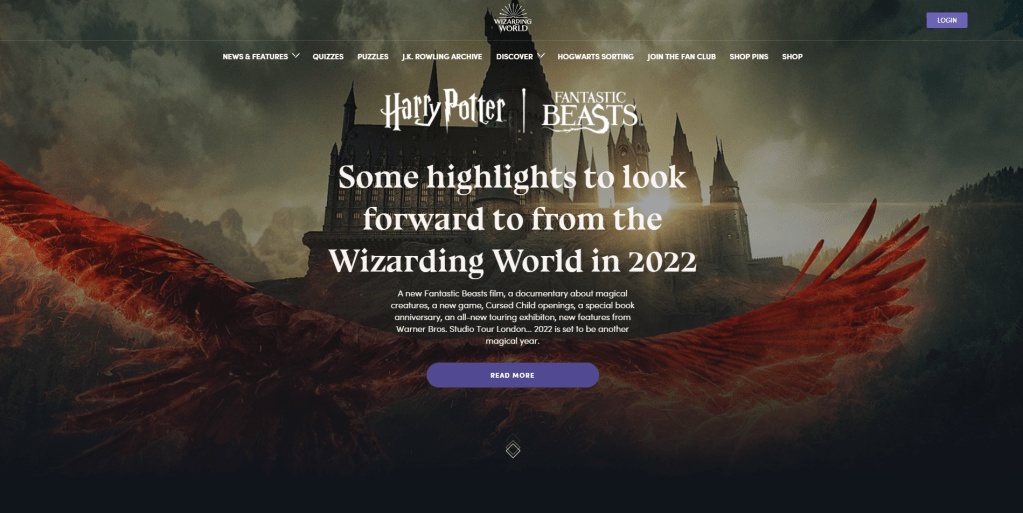

Image from wizardingworld.com

Transmedia Storytelling creates strong connections with people, the art of storytelling is rooted in history as being a strong way of connecting people with ideas. ‘Cognitive science research connects narrative with learning and memory’ (Johnston & Rowney 2018) due to the Harry Potter narrative being accessible at all these different interconnected entry points it is likely that it will remain popular and memorable for many years to come.

References

Johnston, J. and Rowney K., 2018 Media strategies: managing content, platforms and relationships Allen & Unwin, Crows Nest, Sydney, ch 1.

Rowling, J 2022, “Wizarding World: The Official Home of Harry Potter”, Wizardingworld.com, retrieved 26 January 2022, <https://www.wizardingworld.com/&gt;.

What Visual Content Form Should You Use

In this blog we will be discussing the importance of using visuals on social media in a variety of ways to connect with your audience. We will look at two twitter accounts who are apart of the same field and how they use visuals to enhance their social media content. We will also dig deeper and explain why visuals are effective and what type of visuals you should use to achieve specific goals. I will also explain why media managers should be aware of these visuals and how to utilise them in the best way.

I would like to start by outlining the different types of visuals that are commonly seen on social media. They are images, infographics, short videos, long videos, live streams, and gifs. All of these are useful tools that a content creator needs to be aware of and understand to a great depth. Images and infographics are a great way to visually represent information or convey a message to the audience. Short videos are a very good way of delivering a visual message in an easy to watch/bingeable form. Long videos are good for sharing larger amounts of information to an audience which they can consume at their own pace and time. Live Streams are some of the best ways to connect with your true ‘fans’ or ‘promoters’ as it gives them the opportunity to connect with the creator in real time. Asking questions about the content that is being delivered and influencing decision making during the stream. Finally, gifs are an extremely short visual generally used to show the evolution of a product or service, or to create moving logos that are more engaging for the audience.

Before looking at our examples I would like to draw your attention to two quotes which I think are at the heart of this discussion.


‘Consider how the image will make their target audience feel’

(Johnston & Rowney 2018)

‘Effective images evoke responses from viewers. That’s the goal.’

(Fizz & Hatch 2013)

We can take these quotes and slightly adapt them to suit what we are discussing by changing the word image to visual content therefore encompassing all forms of visual content. Now the question you should pose to yourself when creating and selecting visual content is what form of content will evoke the strongest response from viewers as well as what actual content should be displayed within the selected form. These decisions are essential to create strong effective content on any social platform.

Now we will compare two examples of twitter accounts held by games in the horror genre. The first is Dead by Daylight (DBD). DBD uses a variety of visual content on Twitter to connect with and inform their followers. These include images, short videos, live streams, and gifs. All which serve specific purposes as we mentioned earlier. Today we will focus on just their short form video content. DBD use this style of visual content to tease followers with new gaming content. This creates high levels of engagement through share ability and excitement from the player base. As seen in the example below.


Post by Dead by Daylight

If we now look at Hunt Showdown they utilise a similar suite of visual content forms however they excel at cinematic videos. This approach is more like that of creating a film rather than just a short video of something upcoming. This creates a different emotional response in the audience than that of a DBD short video. Rather than pure excitement Hunt Showdown try and make viewers feel in awe of the beauty of their game. This can be seen in the example below produced by Hunt Showdown.


Post by Hunt Showdown

It is clear from the explanation and examples that having a deep understanding of visual content forms is essential to be successful as a media manager or content creator. Allowing you to effectively create content that will connect with your target market and evoke a strong response which is the true goal of any social media account.

References

Dead by Daylight 2022, “Dead by Daylight”, Twitter, retrieved 26 January 2022, <https://twitter.com/DeadByBHVR ref_src=twsrc%5Egoogle%7Ctwcamp%5Eserp%7Ctwgr%5Eauthor>.

Hunt Showdown 2022, “Hunt Showdown”, Twitter, retrieved 26 January 2022, <https://twitter.com/HuntShowdown?ref_src=twsrc%5Egoogle%7Ctwcamp%5Eserp%7Ctwgr%5Eauthor&gt;.

Johnston, J. and Rowney K., 2018 Media strategies: managing content, platforms and relationships Allen & Unwin, Crows Nest, Sydney, ch 1.

Let’s Discuss Social Media

In this blog entry we will discuss Social Media, more specifically how large businesses and organisations utilise this space. Please listen to the podcast below as it will walk you through today’s topic. There will be visual aids below for your viewership.


Created by Dechlan McLeod

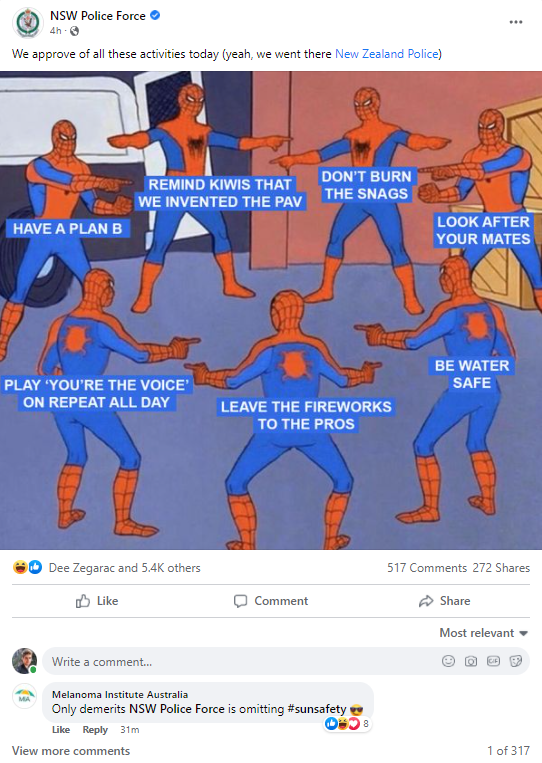
Below are examples of NSW Police Force’s Social Media Posts and account links for you to have a look and browse.


Post by NSW Police Force

Post by NSW Police Force

Post by NSW Police Force

References

Johnston, J. and Rowney K., 2018 Media strategies: managing content, platforms and relationships Allen & Unwin, Crows Nest, Sydney, ch 1.

NSW Police Force 2022, “NSW Police Force”, Facebook.com, retrieved 26 January 2022, <https://www.facebook.com/nswpoliceforce&gt;.

NSW Police Force 2022, “NSW Police Force”, Twitter, retrieved 26 January 2022, <https://twitter.com/nswpolice?fbclid=IwAR2XRB22TubmC_UhL74nD70ua5vcK4_CXWfTl-INh5knDWbGZDFERMxmoxI&gt;.

NSW Police Force 2022, “Login • Instagram”, Instagram.com, retrieved 26 January 2022, <https://www.instagram.com/nswpolice/?fbclid=IwAR3DU9HSO6ro18_STvZWxiWIF5dLrDmlLvCBr2fhQDezdS9QInINe68c58s&gt;.

Managing The Key Elements of Media Strategy


What is Required by Professional Communicators?

Professional communicators today are faced with more and more challenges when it comes to gaining publicity and creating content that engages and reaches the right audience. This means the skills necessary to be successful are quite specific. This is likely due to the “meta” that is created on specific social media platforms. Meta refers to something that becomes the normal (most common) approach or strategy because of how successful and/or efficient it is. It is almost essential for professional communicators to have an exceptional understanding of the current meta that exists on each platform as this allows them to create content that will be the most relevant and engaging for that specific platform. Creating meta content is the safest way to gain success on social media as it has already been proven to work by other creators hence why it has become the meta. However, going against the meta is also a bold strategy that could result in even more success if executed correctly. Content that is against the meta can stand out more than meta content due to its differences in content, creative style, approach, and strategy but requires a lot more thought effort, strategic thinking, and digital media excellence.

‘As a professional communicator you must possess critical interpretative skills and technical competencies for digital media literacy’

(Johnston & Rowney 2018)

I think this is truer now than ever, as strong interpretative skills are required to understand and unpack the meta that exists on social media platforms. As an example, the corporate Tik-Tok meta that exists right now is strongly related to that of telling personal stories and highlighting the brand within those stories indirectly or directly. Although understanding the meta is important, it is only one part of the puzzle that is success on social media. The next step is creating strong content that will be engaging, shareable and bingeable. This requires strong technical digital media skills which is the second part of Johnston and Rowney’s statement in 2018.


Photo by Alexander Shatov on Unsplash

Combining these two key skills is what is truly required from professional communicators today. Allowing them to create successful social media campaigns and stand-alone content pieces that connect with their audience and are in line with the current meta on a platform. If the approach by the creator is to create a non-meta piece of content these skills will need to be used with perfect execution as well as an immense amount of strategic thinking, ability, and implementation. When this is achieved a viral piece of content is generally created and results in a higher-than-normal number of interactions and awareness developed for the creator. Without these skills meta and non-meta content will not be achieved rather what is most likely to be created is filler content which does not generate a good number of views or interactions.

Overall, we can see through this discussion about meta and non-meta content creation why the skills of interpretation and technical competency for digital media literacy are essential for professional communicators today.


References

Johnston, J. and Rowney K., 2018 Media strategies: managing content, platforms and relationships Allen & Unwin, Crows Nest, Sydney, ch 1.

Gamification in Business


How is Gamification used in Business

As we move further through the 21st century we see more and more use of gamification in business. Gamification is the use of gaming ideas in a non gaming context. For example many large businesses have created apps that act as like a game linked to your purchases. These can replace things such as loyalty cards and generally create a stronger connection between business and consumer. Leading to higher sales and greater consumer loyalty.
Another way gamified ideas are introduced into business is through events or sales. For example McDonald’s Monopoly comes to mind. This is where with every purchase you were given a monopoly property to collect. If you were able to collect sets then you would be entered in a draw to win prizes. I will talk about this more though in my podcast which is embedded below.
Overall I believe that more businesses should invest money into gamification concepts and ideas to use within their companies. This will lead to more engaging and profitable business ventures in the future.

Gamification in Business (My Experience)

Check out my podcast for more information and examples on gamification in business!!

CloudCast – My Gamification Experience by Myself

Conclusion

In conclusion businesses do use concepts of gamification in promotions and day to day operations. Although I do not think this is a common enough occurrence. Gamification allows businesses to drive sales and customer loyalty. Gamification definitely has many applications in business and has a lot of benefits to be reaped when applied correctly.


We Need to Gamify Education


Changes in Education

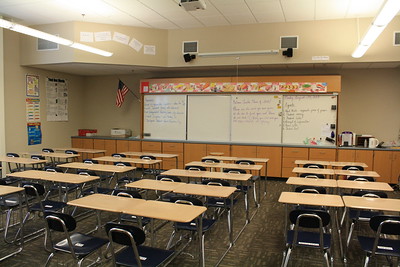
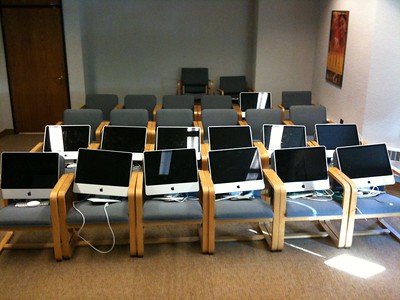
The Education Sector is rapidly changing, or is it? As new technologies and forms of learning arise are we changing our education practices as well or are we falling behind. This is a burning question in the education industry amongst many scholars, teachers, students and informed parents. Below are two images that together form a comparison of what some people think our classrooms should look like. The initial is a very tradition classroom layout and the later is symbolising what we are currently seeing throughout the COVID-19 pandemic. A form of online learning where we meet as a group but not in person rather online.

Old Style Classroom
IMG_1128 by xMizLitx (CC BY 2.0)
Modern Classroom Interpretation
Classroom of the Future by Chris Gebert (CC BY-NC 2.0)

Moving now into my main point for this blog post, why do I think gamification of the education sector is not only necessary but needs to happen sooner rather than later. We are at a point now where education for many younger people is more effort than it is worth. This is generally due to content feeling slow and boring. Where does this feeling come from you may ask. It comes from the instantaneous nature of everything else around us (younger generations). We have become accustom to having access to what we want at the touch of a button through apps or the internet. This is becoming a greater problem in education as we see a decrease in motivation and work ethic. Now this is where I believe gamification can play a largely effective role. Acting as a driving factor in modernising education as well as a source of motivation for students.

Gamification as motivation in education

You may ask how gamification can be used to motivate students rather than distract them. We are seeing gamification being used in many online learning platforms such as Mathletics and TypeQuick. Recently I made a video talking about my own experiences with these two platforms which I will leave here below. For you to gain a further understanding of what these platforms are and how the concept of gamification has been used to make them successful in motivating students.

Gamification in Education by Myself

Through the understanding of how these platforms have effected my own learning. I know that we need to make gamified learning a focus in the years to come. Although currently “only a small percentage of teachers (11.30%) use gamification” (Martí-Parreño, 2016). This change will engage our students more and allow them to feel like the work that they are completing is interesting and useful to them. As they are being constantly rewarded with badges, achievements and high scores through these gamified platforms and apps. Overall this will largely benefit education as a whole because our students will be able to achieve more in shorter periods of time and also achieve greater understandings of concepts and topics they are studying. “The engagement of students in academic activities is related to changes introduced in the context” (da Rocha Seixas, 2016). This quote is powerful for us to understand, it is drawn from research that was conducted and collected throughout the years 2005-2012. It explains to us that a learning environment that is new and in a state of change is the most academically beneficial for students motivation and engagement. This supports my statement that we need to focus on gamified learning as it will bring about change and greatly benefit our students.

With Motivation Comes Direction
Paint: Dr. Ph. Martin’s Hydrus watercolor, cobalt blue Brush: Pentel Aquash Brush, medium Paper: Canson Watercolor Notebook by Kristina Werner (CC BY-NC-ND 2.0)

Another point I would like to add before concluding this blog is that the introduction of gamified apps, platforms and learning aids. Will allow our educators to meet more students where they are at in terms of learning strengths and styles. As a lot of our younger students are naturally good with technology and gaming. Adapting our education methods to cater to these strengths will allow our students to shine and achieve their full potential.

Conclusion

In conclusion I believe we do need to modernise the education sector. This can and should be done through the use of gamified platforms, apps and programs. This will result in higher engagement and motivation levels across our classrooms and students in general. Also leading to potential higher levels of education as less students will become bored and disengaged with learning material.

Please leave any questions or other ideas in the comments below and stay tuned for my of my blogs to come!!!


References
da Rocha Seixas, Luma, Gomes, Alex Sandro & Filho, Ivanildo José de Melo 2015, ‘Effectiveness of gamification in the engagement of students’, Computers in Human Behavior, vol. 58, May 2016, pp. 48-6da Rocha Seixas, L., Gomes, A. and de Melo Filho, I., 2016. Effectiveness of gamification in the engagement of students. Computers in Human Behavior, 58, pp.48-63.

Martí-Parreño, Seguí-Mas, Diana & Seguí-Mas, Elies 2016, ‘Teachers’ Attitude towards and Actual Use of Gamification’, Procedia – Social and Behavioral Sciences, vol. 228, 20 July 2016, pp. 682-688.

Images
IMG_1128 by xMizLitx (CC BY 2.0)

Paint: Dr. Ph. Martin’s Hydrus watercolor, cobalt blue Brush: Pentel Aquash Brush, medium Paper: Canson Watercolor Notebook by Kristina Werner (CC BY-NC-ND 2.0)

Classroom of the Future by Chris Gebert (CC BY-NC 2.0)

My newest video creation!

Check out my video and let me know what you think!!

My main point (explained)

In my video I attempted to argue that YouTube is a great platform to assist in diminishing the digital divide. I showed this through the explanation of what YouTube looks like as a platform in the past and today. I also touched on how different people and ages may use YouTube. I supported these statements with research and some academically sourced statistics. Lastly I also conducted some primary research in the form of two interviews. Which I think allowed me to create a stronger argument as my ideas were supported by what I discovered through my interviews.

Strategies I Used

There were a variety of things I needed to consider in the making of this video. These included planning, framing, shot composition, audio, editing, source material and music.

The planning process of my video was lengthy. This was because I wanted a creative way to produce this video. Finally I thought of the idea of focusing on YouTube and using podcast style interviews to gain stronger evidence for my argument.

Framing and shot composition were important in a few aspects of my video. These include the introduction, interviews and my conclusion. I use the rule of thirds to position myself in frame and also both people in the interviews. This allowing the viewers to easily remain focused. In terms of shot composition, I thought mainly about the interviews. I chose to place the microphone on the small coffee table for two reasons. First being to improve audio quality and the second to fill up the shot a bit. As the shot would have looked very blank and empty if nothing was on the table.

Audio quality was something I tried to maintain throughout the videos. I decided to use my phone mic to record both my intro and outro as I was quite close to my phone and the quality wasn’t lost too much. For the explanation of my argument I used a Rode Podcaster as this is the best quality audio recording available at this point in time. In the video you can easily hear the difference in this microphone compared to the others. Although for the interview I needed a better microphone than the one on my iPhone because my phone was placed further away to record the video portion of the interview. I chose to use another standing mic I have because this audio quality should have been better, but something I didn’t consider was the sensitivity of the mic on the tripod. So in the recording you are able to hear some kind of tapping sounds from the tripod moving.

Editing for this video was slightly more complex than usual mainly due to the fact I had recorded audio separately to video for the interviews. So I needed to find a way to sync them up when editing. The strategy I used to ensure that both audio and video were in sync was during recording I clapped at the beginning a few times. This is so that when I edited I would be able to sync up the sound of the clap with my hands in the video. This ensuring the rest of the video and audio would be synchronised. Other decisions I made while editing were some fade transitions to allow a flowing transition between scenes throughout the video.

Lastly my use of source material and music were strategically chosen. I decided to overlay creative commons licensed time-lapses (that I found on Flickr) whilst I explained my argument. This was to reflect the speed of change we see in the ‘YouTube Scene’ as well as generally in the digital media age we are living in. For music I decided to use it mainly throughout the drier parts of the video (my explanation of argument, titles for interviews) this would create the feel of the video moving faster and not dragging along. I chose to use music produced by No-Copyright-Sounds (NCS). As their music is free to use and it has a modern feel.

Challenges I Faced

There were a few challenges I faced during the creation of this video. The first being what to use as overlay material when explaining my argument and the question ‘What is the digital divide’. I overcame this through my use of Flickr, I found a very nice time-lapse shot in Brisbane. This worked very well as it shows our world as it is today and the fast pace of the video complements the speed of growth of YouTube and digital media today.

Another challenge I faced was transferring the videos from my iPhone to my PC. This was a problem due to the format of the video being incompatible with my editing software. Although I was able to overcome this by using MovieMaker to render the clips (converting them to a different format) allowing me then to use them in my more complex software (Davinci Resolve).


References

Harmer, B. (2010). YouTube: Online Video and Participatory Culture20102Jean Burgess and Joshua Green. YouTube: Online Video and Participatory Culture. Cambridge: Polity Press 2009. 172 pp., ISBN: 9780745644790 Soft cover Digital Media and Society Series. Online Information Review, [online] 34(2), retrieved 25 Sep. 2019, https://ebookcentral-proquest-com.ezproxy-b.deakin.edu.au/lib/deakin/reader.action?docID=5502950.

Lewis, C. (2019). YouTube Captures Aussie Audiences’ Time and Attention—Here’s Why. [online] Think with Google, retrieved 25 Sep. 2019, https://www.thinkwithgoogle.com/intl/en-aunz/advertising-channels/video/youtube-captures-aussie-audiences-time-and-attentionheres-why/.

Flickr

Night Lights by Oguz Baki (CC BY-NC 2.0)

Brisbane Timelapse by Sam Petherbridge (CC BY-NC-ND 2.0)

Music

Elektronomia – Sky High [NCS Release] https://www.youtube.com/watch?v=TW9d8vYrVFQ

The Making of “Top 5 Misconceptions About Artificial Intelligence”


Video Content!

When I began thinking about the creation of this video my first question was “How should I approach the topic of AI in an engaging way?”
With this question in mind as well as the very limited time I had to deliver my content in the video I thought it would be best and most interesting to do a “top 5” style video. Thinking about this I decided to focus on the most common misconceptions people generally have about Artificial Intelligence. I then did some research and found some statistics to use as well as the most agreed upon top 5 misconceptions.

Strategies I used!

The initial planning of this video involved research, decisions about structure (Intro, body, conclusion), selection of images and videos to overlay, editing as well as my use of background music. My research I have discussed and explained above.

For the intro I wanted an interesting setting to gain the viewers attention straight away. I thought I would record outside at first but then decided not to as I was recording audio with just my phone and the sounds of wind would have also been recorded. I then decided to record in a car as I could use it as a way of leading into my first point in the video (we are surrounded by AI). Whilst recording my intro I positioned my phone in a way that my face would be placed towards the top left of the frame following the rule of thirds.

I then decided to record my main points, I used a script to ensure I got all of the information correct and included all of what I wanted to say. I tried to include some humour in the form of jokes about the end of the world at the hands of AI as well as a subtle pun at the end of the video involving the word “news”. I think this was a good decision as it lightens the mood of the video and adds to the audience retention element. I also numbered some of the points in the video to help the audience with recalling them after they have finished watching the content.

My conclusion was very short in this video as I felt like I did not really have enough time to fit a solid conclusion in without sacrificing the main content of the video. So I decided to end the video on a rhetorical question as the credits began to play.

My use of source material was very key in the creation of this video I used many images and also three videos. I found all of which using Flickr which allowed me to search for creative commons licensed content which I could use. I looked for images to reflect the ideas and emotions I was trying to portray in the video. For the videos, the first one I chose because it opposed what I was saying and represented more of what the audience may think about AI already. The second video was a time lapse which portrayed humans daily lives in the city which directly reflected what I was speaking about.

During the editing process of this video I made a large amount of decisions but I will focus on a few in this blog. The main ones being using a fade transition to move between my intro, videos and images. This effect creates a more flowing and aesthetically pleasing video to watch. The other decision I made was to include short title screens for each new point to make it clear what my main ideas were to the viewers. Lastly I also blurred out the first video so that the faces were unrecognisable as I did not have permission to use them in my video.

Finally I decided not to use sound effects in this video because I believe it would have not added too much to the value of the content. Rather I used a non copyright piece of upbeat music. To give the feeling that the video was moving quickly and that adds to the retention of the audience viewing the video. I also faded in and out the music during the intro and outro to make a smooth start and end to the video.

Challenges I Faced!

I faced a few challenges in the process of making this video one of which was the time limit of max 3 minutes. This top 5 was a lot of content to fit into the time limit. To overcome this I made a very short outro and my intro led into the first point. I also used short title screens to break up the each of the points rather then a more fancy time consuming edit.


Sources

Ali, M. (2019). 5 Common Misconceptions About Artificial Intelligence. [online] Lionbridge.ai. Available at: https://lionbridge.ai/articles/5-common-misconceptions-about-artificial-intelligence/ [Accessed 31 Aug. 2019].

Music

Tobu – Hope [NCS Release] (https://www.youtube.com/watch?v=EP625xQIGzs)

Images/Videos

Asimo by tjabeljan (CC BY 2.0)

Car by llee_wu (CC BY-ND 2.0)

GPS by Stig Anderson (CC BY-SA 2.0)

IRobot by Bernard Goldbach (CC BY 2.0)

La Pau Sat (Timelapse) by Michael Elleray (CC BY 2.0)

IMG_0446 by Ben Smith (CC BY 2.0)

Coca Cola by Marion Doss (CC BY-SA 2.0)

MacBook light shift by Milind Alvares (CC BY-NC-ND 2.0)

Ford Cars by Mike Mozart (CC BY 2.0)

Google Logo in Building43 by Robert Scoble (CC BY 2.0)

MacDonalds by yum9me (CC BY-NC-ND 2.0)

iPad retina display by Antonio Silveira (CC BY 2.0)

Numbers And Finance by reynermedia (CC BY 2.0)

“Robot” by Courtney Powell (CC BY-NC-ND 2.0)

IMG_5607 by RightBrainPhotography (CC BY-NC-ND 2.0)

Finance by GotCredit (CC BY 2.0)

Sport action by Qrodo Photos (CC BY 2.0)

Stormy weather by Mark Freeth (CC BY 2.0)

Who Am I???


Recently I have planned, recorded and published a video about myself to my YouTube channel. The video can be seen below.


During the creation of this video I had to think about many things including but not limited to. Content, scripting, positioning, video capture, audio capture, lighting and editing. The combination of all of these allowed me to create a short succinct video that explained a little bit about who I am and what I am interested in.

The content I included in this video was my age, my studies, my current hobbies as well as my biggest past hobbies. I also decided to talk about what my life looks like a bit at the moment with my travelling and friends living across the world in Austria. I also decided at the end to link my social media in the description to unify my personality in the video with my online personality across social medias.


Whilst writing a brief script for the video I used notepad to jot down key things I wanted to mention to have an idea in my head of how the video will be structured. This worked well for me as I then did not “read off of a script” rather just use it as a prompt. This allowing me a higher level of authenticity throughout the video.

Positioning was not too complex for this video but it was still something I was consciously thinking about. I used the rule of thirds to position myself slightly off centre in frame and also so my eyes were in line with the top third. This allowing the audience to easily focus on what I was trying to deliver.

Video capture and audio capture was about choosing the right device to use. I decided for quality reasons I would record in 1080p using my webcam. This I thought would be a better decision than my iPhone for this recording because I am experienced with the webcam due to other videos I have made. For audio I used a mic hanging from a stand that you can see slightly in the shot of the video. This is a high quality audio recording device that limits the popping sounds that can be heard whilst recording on my phone for example. These decisions allowing me to have the highest quality audio and video possible for this video for what I have available.

For lighting I decided to use one of my side monitors in my setup to light my face. This is because I do not have any bright lights to light my face at the moment. For lighting the background I decided to use just the light of my room and some natural light. This giving the video a nice setting and allowing the audience to see me clearly.

Lastly I did some light editing to improve the entertainment value of the video. This including looking for any glitches in the recording as well as inserting some photos I had taken and positioning them correctly in the frame.


The challenges I faced in the creation of this video were limited because as a hobby I make gaming videos for YouTube quite often. But this was the first video I recorded that the main content was just a video of myself talking. As normally I have a game that I am playing as the main feature. I was a bit nervous recording this but overcame it by planning more and also practising before I recorded.

Digital Media in Education -CloudCast

Here is a link to my podcast if you have not heard it yet: https://soundcloud.com/user-831404300/cloudcast-digital-media-in-education


Creation of my podcast
My podcast is a discussion on the benefits and limitations of the use of digital media for student learning and engagement.
Approaching this topic I knew that it would be more engaging if I drew on my own experiences and knowledge about the topic as it is relevant to me whilst I am studying online. In doing this I related ideas and statements back to examples I had experienced so far throughout my study. I also used a name for my podcast series “CloudCast” to allow listeners to more easily differentiate my podcasts from others.
Another strategy I employed in the creation of the podcast was tone of voice. I varied my tone as much as I could (as I was sick at the time of recording) to pose rhetorical questions or factual statements throughout my piece. This making it easier for listeners to engage with and understand.
I used the program audacity to edit my audio recording as I think it is quite easy to use and I am familiar with it. This is because I also use it to edit gaming commentaries for some of my YouTube videos. Using audacity I edited out any mistakes I made whilst speaking as well as added in intro, prelude and outro music (including fade ins and fade outs). Finally whilst editing I also used the normalize feature to increase the volume of my voice recording so it was consistent throughout the podcast.
The last strategy I used in the creation of this audio was quality equipment. I used a microphone that reduces the ‘pop’ sound of p’s in my speech. It also eliminates most background noise and records my voice clearly. This leading to a higher quality audio recording, overall a higher quality podcast.

My podcast was informed by an academic journal ‘Digital Culture & Education’ I found this journal while researching my topic. Whilst reading I noticed a line in their conclusion that summed up and evidenced the point I was attempting to make in my podcast. So I directly quoted this line and used it as evidence for my previous ideas in the podcast.

I did not create anything other than the recording of my own voice for this podcast, however I did use creative commons music throughout the podcast as an intro, outro and to split up the benefits and limitations I discussed in the middle. I found this creative commons piece named Electronic Intro Music-Creative Commons which will be referenced below and in my sound cloud description.

Throughout the task there were a few challenges I overcame the largest one being, my voice sounding off as I was sick. To overcome this I recorded short parts at a time making sure my voice sounded energetic and enthusiastic to portray how I feel about the topics discussed. I also drank water in between recordings to help with this.
Another challenge I faced was finding appropriate creative commons music to use for the podcast. I was able to overcome this through using sound cloud and searching for ‘electro creative commons intro’ this brought me to the song I chose. Which was energetic uplifting and reflected the mood I wanted to portray.


References
Davis, K., Ambrose, A. and Orand, M. (2017). IDENTITY AND AGENCY IN SCHOOL AND AFTERSCHOOL SETTINGS: INVESTIGATING DIGITAL MEDIA’S SUPPORTING ROLE. [ebook] Washington: University of Washington, p.44. Available at: http://www.digitalcultureandeducation.com/cms/wp-content/uploads/2017/03/davis.pdf [Accessed 26 May 2019].

Electronic Intro Music-Creative Commons by Anoop H (CC BY 3.0)